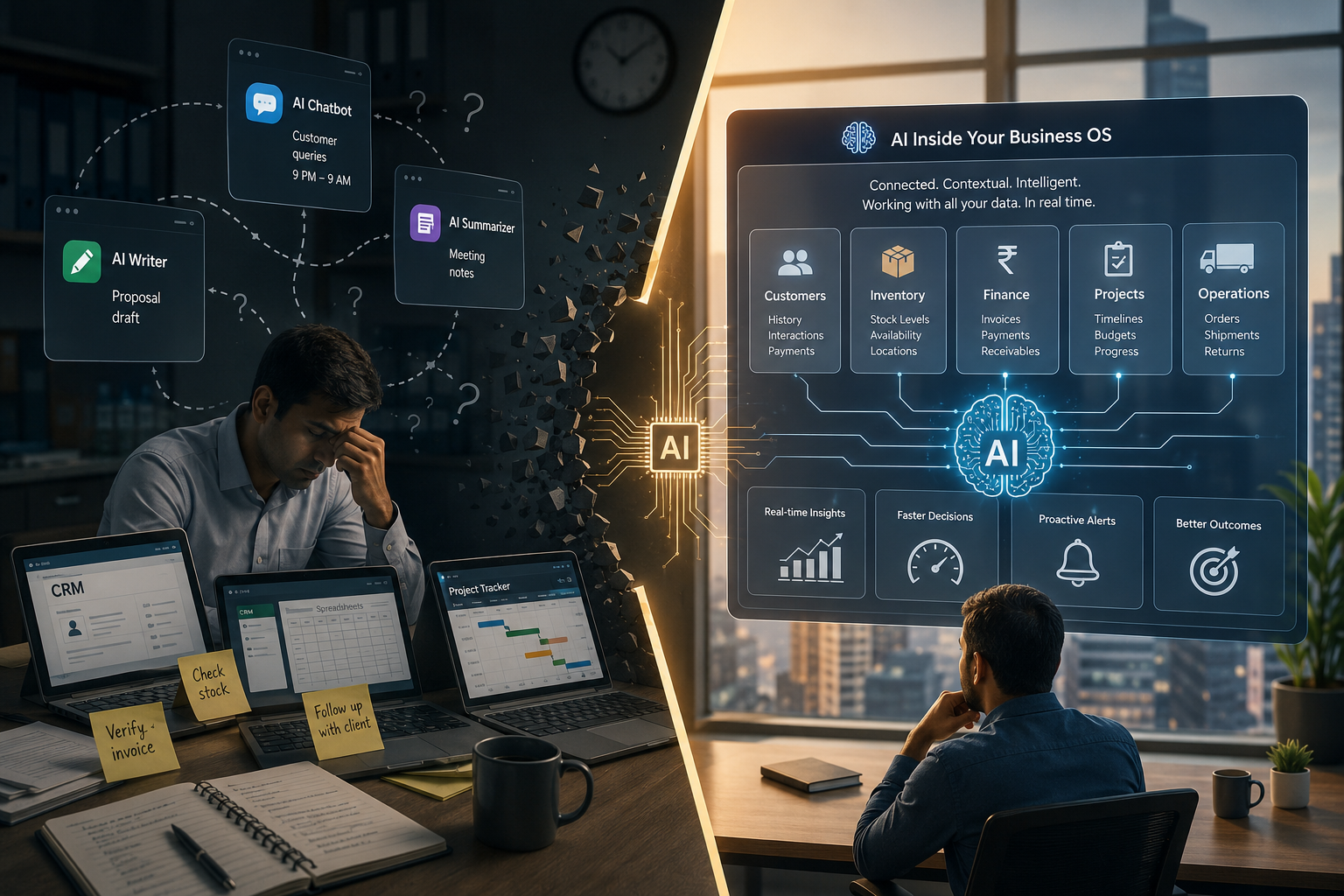
Agentic AI: The Next Evolution of Artificial Intelligence
Artificial Intelligence has evolved rapidly over the last decade, moving from rule-based systems to machine learning models and, more recently, to generative AI. However, a new and powerful paradigm is now emerging—Agentic AI. Unlike traditional AI systems that react to inputs, Agentic AI systems are capable of setting goals, planning actions, executing tasks, and adapting dynamically with minimal human involvement.
What is Agentic AI?
Agentic AI refers to artificial intelligence systems designed to operate as autonomous agents. These agents can perceive their environment, reason about it, make decisions, and take actions to achieve predefined or self-generated goals. The key difference between Agentic AI and conventional AI lies in autonomy and intentionality.
While traditional AI models respond to prompts or predefined rules, Agentic AI systems actively decide what to do next, often breaking complex objectives into smaller tasks and executing them step by step.
Key Characteristics of Agentic AI
- Autonomy: Operates independently without constant human guidance.
- Goal-Oriented Behavior: Works toward achieving specific outcomes.
- Planning & Reasoning: Can analyze multiple steps ahead and choose optimal actions.
- Adaptability: Adjusts behavior based on new data or environmental changes.
- Tool Usage: Can interact with APIs, databases, software, and external systems.
How Agentic AI Works
Agentic AI systems typically combine large language models (LLMs) with decision-making frameworks, memory systems, and tool integrations. The process usually involves:
- Understanding the goal or objective
- Breaking the goal into actionable tasks
- Selecting tools or methods to perform each task
- Executing actions and monitoring outcomes
- Learning from feedback and optimizing future actions
This architecture allows Agentic AI to operate continuously, refine strategies, and handle complex workflows that were previously impossible for static AI systems.
Real-World Use Cases of Agentic AI
Agentic AI is already making an impact across multiple industries:
- Business Automation: Automating workflows such as invoicing, reporting, customer follow-ups, and inventory management.
- Software Development: Writing code, running tests, debugging issues, and deploying applications autonomously.
- Customer Support: Handling end-to-end customer queries without human escalation.
- Finance & Accounting: Managing expense tracking, compliance checks, and financial forecasting.
- Healthcare: Assisting in diagnostics, scheduling, and treatment planning.
Benefits of Agentic AI
The rise of Agentic AI brings several significant advantages:
- Increased operational efficiency
- Reduced manual effort and human error
- Faster decision-making
- Scalability across complex systems
- Enhanced productivity for teams and organizations
Challenges and Risks
Despite its potential, Agentic AI also introduces challenges:
- Control & Safety: Autonomous systems must be carefully monitored.
- Ethical Concerns: Decision-making transparency and accountability are critical.
- Data Security: Access to sensitive systems requires strong safeguards.
- Over-Automation: Excessive reliance on AI may reduce human oversight.
Agentic AI vs Traditional AI
Traditional AI focuses on predictions and responses, while Agentic AI emphasizes actions and outcomes. This shift marks a fundamental change in how AI systems are designed and deployed, moving from passive tools to active digital collaborators.
The Future of Agentic AI
As AI continues to advance, Agentic AI is expected to become the backbone of intelligent digital ecosystems. From autonomous business operations to personalized digital assistants capable of managing entire workflows, the possibilities are vast.
Organizations that adopt Agentic AI early will gain a significant competitive advantage by reducing costs, improving efficiency, and unlocking new innovation opportunities.
Conclusion
Agentic AI represents a powerful leap forward in artificial intelligence. By enabling systems to act independently, plan intelligently, and adapt dynamically, it opens the door to a future where AI is not just a tool—but a true autonomous partner in innovation and growth.