
Transform Your Business Operations with Automation
Reduce Costs
Implementing automation in the workflow can help organizations save money by reducing the number of manual tasks. It automates repetitive tasks, reduces errors and increases efficiency.
Reduce IT Burden
Maintaining complex IT systems can be a costly and time-consuming process. With automation businesses can reduce their IT burden by moving to cloud-based solutions. It also frees up IT staff to focus on more strategic initiatives.
Enable Easy Collaboration
Collaboration is essential to the success of any project, and workflow that can enable teams to collaborate more easily. Centralise your business documents and easily share them with authorised users anywhere, at any time.

Effortlessly Manage Your Business with Automation
Effortlessly streamline your business operations through powerful automation tools. Save time and increase productivity by automating repetitive tasks. Unlock efficiency and focus on strategic initiatives while our automation solution handles routine processes. Experience seamless integration and enjoy the benefits of a streamlined, automated workflow for your business. Upbooks sends transactions for you automatically by automating:
Payments Made Easier Than Before
Don't let anything get in the way of receiving your payments. Send out invoice reminders on a regular basis. You can also save time and optimise your business by creating recurring invoices for your regular customers. Expenses are generated automatically by creating a recurring profile for expenses that occur on a regular basis, then sit back and watch as it captures them for you automatically. You can also set up recurring transactions to be charged automatically.
Automate everyday
LATEST UPDATES
Our Popular Blogs
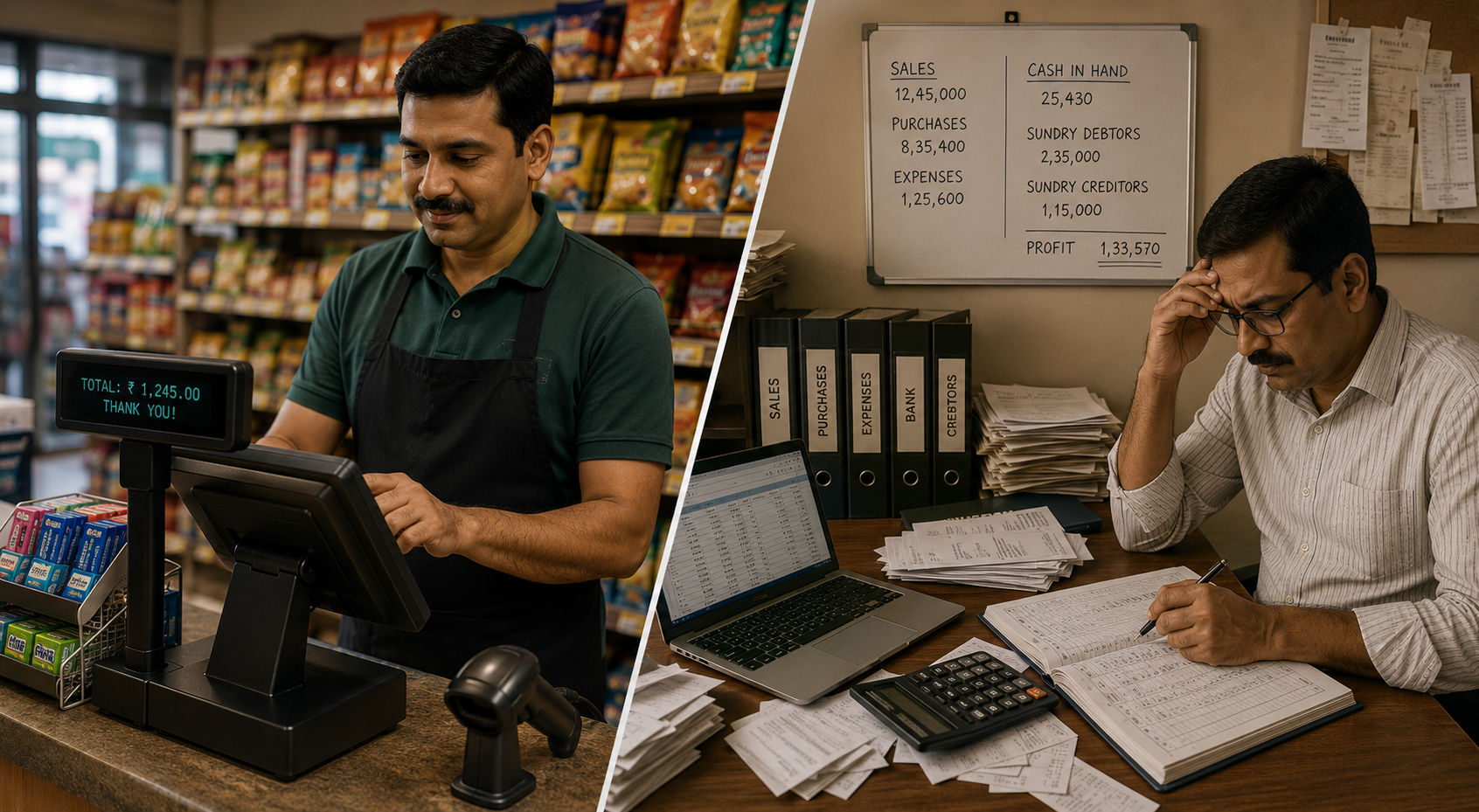
Why Indian retail businesses are running POS and accounts as two separate businesses
Most Indian retail businesses run their point of sale and their accounts as two separate systems, reconciled manually, always out of sync. This blog identifies five reasons that separation is costing retailers more than they realise — from daily reconciliation overhead to real-time visibility gaps — and what an integrated retail operation actually looks like.

The Hiring Process Nobody Built — How SMBs Manage Talent Without a System and What It Costs Them
Most SMBs treat every hire as a one-off event. No defined stages, no shared pipeline, no documented criteria. This blog names the pattern — talent improvisation — traces how it happens across real business scenarios, and reframes the true cost of hiring without a process in financial and operational terms.

Inventory That Lives in Someone’s Head: Why Stock Visibility Is the First Thing Manufacturers Lose When They Grow
When manufacturing businesses grow, the person who carried the inventory picture in their head is no longer enough. This blog identifies four reasons stock visibility breaks under growth, the compounding cost of inaccurate inventory data, and what a connected inventory system looks like compared to the manual approach most mid-sized manufacturers are still running on.